Monday, 16 September 2013

The Weird World of Petticoat Discipline

Now for something different: Petticoat Discipline.

No, we’re not joking!


Petticoating, otherwise referred to as pinaforing, is a kind of rare, humiliating, and socially unacceptable punishment, which involves dressing a boy in girls’ clothing as a form of discipline.

Not just limited to certain subgenres of erotic fantasy and role-play, there is credible evidence in social history that this was a form of punishment actually employed and dating back at least to the Victorian era. It was even discussed openly in family magazines during the Victorian and Edwardian eras.


Until World War One, it was fashionable to dress small boys in the same attire as their sisters, up until age five or six: ribboned vests, lace dresses and petticoats, and even bonnets. 


Older boys would be dressed by their mothers or nannies in pretty, girlish clothing as retribution for minor offenses.

Boys were feminised by being forced to wear female clothing, and made to feel like “sissies” in the presence of strong females, such as mother, aunt, grandmother, and often in the presence of his siblings, cousins, and other girls of their own age. By humiliating and embarrassing the boy, and dressing him conspicuously in feminine clothing and fabrics, moderate behaviour which did not draw attention was encouraged.
The said boy may even have been forced to appear in public dressed thus, sometimes even in matching garments as those worn by his mother or sister. He may have been made to perform tasks which, at the time, were considered to be “girls’ work”. This was unendingly humiliating, and as such, was deemed to be a deterrent from behaving in such a way as provoked the punishment again in future. At the lighter end of the spectrum, boys were dressed in bow ties, velvet and short pants; the extreme end had boys being forced into lace, bows, and even shaved legs and female underwear. Sometimes petticoat discipline did not involve girls’ clothes; a sailor suit or Little Lord Fauntleroy outfit was enough to keep a boy in line. This was used up to age twenty in some extremes.


There are claims that petticoating had an additional, sexual context for some mothers; some women had long wished for daughters and hence gained some satisfaction from feminising their sons.

What was the impact of this childhood punishment? Some adult male transvestites in the past have reported experiencing petticoating as children. At the very least, identity crises and self esteem issues must have ensued.


This scenario is actually re-enacted as a fetish. Whatever rocks one’s boat!

Tuesday, 10 September 2013

Where Have All The Petticoats Gone?

Like other undergarments, petticoats have a long and illustrious history, the story of which we will embark on another time. But the question for today remains: where have all the petticoats gone?


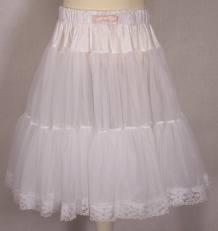
A petticoat goes by many other names: chemise, slip, camisole if covering only waist up, half-slip if just covering the waist down. True petticoats are often puffy and layered; slips or chemises are sleek and more fitted.


Once a staple of everyday wear, with many of them in every woman’s wardrobe, a petticoat is traditionally an underskirt. The petticoat or slip was, even thirty years ago, considered by many to be an essential wardrobe item for any well-dressed “lady” while wearing a dress or skirt. Whether a dress or skirt was sheer or not, a lady was not considered to be fully dressed unless, like stockings or pantyhose, she was wearing a petticoat. Many older ladies continue to view a petticoat as a daily essential item of clothing.


Oftentimes a petticoat was required to give outer clothing its shape; layers of tulle petticoats were common under full skirted designs in the 1950s. Today, these garments usually have the required petticoat sewn in permanently as part of the whole.


Slips were also very handy in disguising the lines of bras, underwear and stocking suspenders. Coloured underwear worn under paler clothing was not an issue either, when a slip was worn.
Today, the fashion of wearing petticoats or slips for daily wear, which was common in the 1950s and 1960s, has passed.  But while the fashion has changed, and many women (particularly younger women) have the philosophy that “less is more” when it comes to wearing a slip or petticoat, there are still times when almost every woman will be glad to have at least one of these garments in her wardrobe:
·        A slip allows a dress or skirt to hang smoothly
·        Warmth: want to wear that summery dress but it’s just a tad chilly? That extra layer underneath, while thin, can make the world of difference
·        Wearing a slip makes one feel just that little bit more put-together
·        If you want to wear a full-skirted dress and minimise your waist, wearing a layers petticoat is the perfect way to achieve the look.
·        Sheer dresses or skirts often just need a slip – for modesty and, let’s face it, to look ideal. Wearing a slip is simply classy.
·        Many fabrics can be uncomfortable or chafe against the skin; solution: wear a slip!
·        A slip will protect your clothing from perspiration in hot weather – the downside is that it’s another layer to wear. A cotton slip under synthetic clothing is, however, cooler and more comfortable in the heat than synthetic against skin.


While most of us might not regularly wear a petticoat or slip, they are readily available – and are an investment every classy woman should have in her wardrobe!


Monday, 2 September 2013

Hot in Rio!


Here at Undiewarehouse, we are excited to announce a brand new line to our enormous range of merchandise: Hot in Rio Brazilian Lingerie.

Brazil, in South America, is associated with passion, colour, fun, an easy-going nature and a focus on beauty, sexiness and pleasure.

Devised and designed by native Brazilian woman, Camila Moraes, who is living in Australia, Hotin Rio is an innovative and original lingerie range comprised of fashionable and funky designs similar to those styles available to Brazilian women in their homeland. Based on the philosophy that women should feel “confident, comfortable and sexy”, these outstanding lingerie sets are luxurious to wear, yet comfort has not been compromised in any way.

Following a comparison between the Brazilian and Australian lingerie markets, Hot in Rio brings to our shores something its founder felt was previously lacking: the distinctive colours, styles, and originality of tropical and exciting Brazil, in sexy and appealing lingerie which is fun and flirty to wear – and show off!

So what is different about Hot in Rio? Aside from the smooth fabrics, gorgeous accents, bursts of colour and Brazilian sexiness...

The Brazilian Wavy Padded Bra is designed to lift and accentuate the breasts. Constructed of high quality microfibre pads, the cups have three spliced waves which push the breasts elegantly up and centrally for extra boost.

Brazilian Cut Knickers, Thongs and Panties are sexy yet comfortable; designed as are Brazilian swimwear styles, this underwear is perfect for wear at the gym, work, partying and for special occasions. Many of the Hot in Rio Brazilian Cut underwear options also have adjustable side straps.

Hot in Rio has a range of style collections:

·        Lapa  (Sexy) – named for Rio de Janeiro’s bohemian suburb, this collection is sexy and striking


·        Carnaval  (Fashion) – trendy and tropical, based on the world’s biggest festival!


·        Sugar Loaf (Romantic) – a magical, romantic spot in Rio


·        Ipanema (Knickers)  - arguably the sexiest beach in the world – fantastic fit knickers inspired by the elegance of this place


·        Bossa Nova (Bridal) – specially designed for charm, laces, slinky fabrics, ribbon and satin accents...


·        Copacabana (Basics) – inspired by one of the world’s most famous beaches – this collection is for everyday wear: light, smooth and comfortable yet oh so stylish.


At Undiewarehouse, we currently have twelve  Hot in Rio items for sale online, at truly  fantastic prices. (As we update our website, keep a lookout for more over time). From cute babydolls, to slinky vinyl lingerie sets; sexy fully boned corsets to elegant lace lingerie sets – you will be spoilt for choice. What better way to embrace the warmer weather as summer approaches, than to take a figurative trip to Brazil?

Monday, 26 August 2013

Chastity Belts – Part 2 – Not Unheard of Even Today!

Following on from last week’s article on “Chastity Belts – Fact or Fiction?” let’s take a look at modern-day anecdotes on the use of these truly medieval devices.
While not uncommonly seen in the BDSM community and underground kink stores, there are cases over the world, even in the twenty-first century, of the use of chastity belts to prevent women from participating in sexual activity. Read on...


Indian Women Forced into Chastity Belts
The Asian Human Rights Commission reported in 2007 that women in the Rajasthan region of India were being forced to wear chastity belts. These devices caused severe injury and bleeding. One woman was found haemorrhaging on a bus; when she was taken to hospital, she was found to be locked into a metal chastity belt.
Women’s rights in this region, one of India’s most popular tourist areas, are appalling, and the practice of forcing women to wear these medieval devices is widespread. Women there are frequent victims of violent acts at the hands of men, and are bartered for and forced into marriages, their value to men on par with that of cattle. More highly educated women are worth less in dowry within Rajasthan’s middle class society. The forcible use of a chastity belt is yet another consequence of the abominable way in which these women are viewed.


Chinese Wooing Device
In 2012, a man aged in his 50s presented himself at the Changchun World Sculpture Park – naked except for footwear and a homemade chastity belt. Bearing signs advertising his availability for marriage, the man depicted himself as an inventor, philosopher, poet, and holder of a doctoral degree. His chastity belt represented his willingness to be faithful to his future wife.


Image: Chinanews.com


Holiday Without Hubby? Time to Lock Up!
A British woman set off security alarms on her arrival in Athens, as reported in 2006. Security staff found she was wearing a metal chastity belt; her husband had insisted she wear it for the duration of her holiday in Greece, so he need not be concerned that she may indulge in an affair during his absence. Nothing like a little trust!

Protection from Men?
The July 2000 Australian Cosmopolitan Magazine carried a story on Chinese women in Indonesia who voluntarily don plastic and metal chastity belts to protect themselves from rape and assault. In a country where rape is commonly used to terrorise Chinese women, who often enjoy a better standard of living than many local Indonesians, part of dressing to go out for many women includes wearing this protective device over their underwear. Even the belts aren't fail-safe: some rapists threaten to kill the women if they don’t provide the combination, however the precaution is worth trying. Many of these devices are sold and their use had become quite widespread among the Chinese community.


Image: Internet Archive Wayback Machine


A Chastity Belt for Doggies?

As reported by the Huffington Post in February, 2010, a dog breeder from Louisiana had a novel idea to play his part in preventing the overpopulation of dogs in the Deep South. Believing that desexing could be detrimental to the health of canines, or that some owners may in future wish to breed from their pets, he introduced his pet Anti-Breeding System (PABS): a belt made from polypropylene with an eight-buckle locking system. A washable mesh pad completed the contraption, intended to be worn by female dogs. This chastity belt for dogs would allow for normal toileting, but deny access for male dogs sniffing around for a little fun! The only downside? The mesh pad, not surprisingly, requires regular washing. Nice...


Image Sourced from PABSforPets.com

Monday, 19 August 2013

Chastity Belt – Fact or Fiction?

This week we’re stepping away from the “norm” as regards lingerie, underwear, and hosiery, and taking a look at an item we've possibly all heard about historically, even joked about – but which we may be uncertain as to whether it ever really existed:  the chastity belt.


What is a chastity belt? Put simply, it is an item of “clothing” which locks onto the body and prevents any possibility of sexual intercourse, and may be worn to protect the wearer from either temptation or rape (or both). Made from metal, some may have had padded linings. With or without this consideration, prolonged wear would result in great discomfort, wounds, infection, and even death from blood poisoning in extreme cases.


Modern myth tells us that the chastity belt was first used during the Crusades: Crusaders (ie, men), travelling to the Holy Lands in the 1100’s to fight in the Papal Wars, would lock their female partners (left at home) up in these contraptions which would allow no access for any kind of sexual activity. Hence, the women were forced to be faithful and chaste; one can assume the men placed no similar restrictions upon themselves! Many other references have been made historically, but there is no evidence that these were more than metaphorical and perhaps wishful thinking on the part of men of the time.

Contrary to popular belief, there is no evidence that such an item existed until well after this date. The first historical reference to a chastity belt comes from Renaissance poetry in the 1500’s, when asking a woman to wear such a device was a poet’s way of embarking on a “mutual” commitment of fidelity to each other (though the man never volunteered the same courtesy from himself).


While there are certainly poetic references to chastity belts from the sixteenth century, the first real chastity belts we have evidence of today were manufactured in the 1700’s. Surprisingly, they weren't actually designed to keep women sexually faithful: it seems they were designed as a way to prevent children from masturbating. Cruel? It seems so.
At about the same time, women started to participate in the workforce with the beginning of the Industrial revolution. Without any legal or practical protection against sexual assault, harassment and rape, some women may well have devised their own chastity belts of various designs in order to protect themselves from violation.


What is the role of the chastity belt in today’s society? Most commonly, these devices are popular as kink-wear in the BDSM community.
Fortunately, those at the extreme end of the abstinence-as-sex-education philosophy do not at this time lock their daughters up in chastity belts – though one could argue that the “purity” rings some fathers place on the fingers of their daughters while extracting formal promises of chastity until marriage to a man of the father’s choosing are a figurative “chastity belt”. What do you think?


And, surprisingly or not, women are still forced by men to wear chastity belts today: stay tuned...

Tuesday, 13 August 2013

The Importance of a Post Surgery Bra

While it’s not something most women consider unless or until it becomes a personal necessity, if surgery is ever required to the breast area, we can’t stress highly enough the importance of the correct post-surgery bra.


There are myriad reasons why a woman may undergo breast surgery. It may be for cosmetic reasons – an augmentation, a reduction, or a lift (mastopexy). It may be due to a diagnosis of breast cancer, resulting in a lumpectomy, or partial or full mastectomy, with or without reconstruction. Any specialist breast surgeon will agree that wearing the correct post-surgical breast garments will not only contribute to a more comfortable healing process, but complying with medical instructions in this way will help achieve the best possible outcome, with a reduced recovery time.

A post surgery bra will possess a range of specific criteria. If intended for the first phase of recovery, straight after surgery, it will compress the body evenly – this is very important to the recovery process. These garments will allow easy access for wound checking and dressing changes while the patient is still in the hospital.


Comfort is imperative. Most of these garments are made from soft, quality cotton which is flexible and non-irritating; many are without seams in the cups. Most are latex-free. The fact that they are wire-free is very important – both for comfort and also for proper circulation and lymphatic drainage during the healing process.

Wider-than-usual shoulder straps assist in the provision of comfort and maximum support. Some post-surgery bras pull on over the head; others will have front closures for ease of use. These can be either a lined hook-and-eye closure system or a zipper closure. Most do not have clips, buttons, or embellishments.


Many post-surgery bras include pockets in the cups designed to hold breast prostheses, which are commonly used by women after undergoing mastectomy if reconstruction is not an option, or not chosen.


A post-surgery bra is also important for wear by women undergoing radiation treatment to the breast. Over the course of treatment, which usually takes up to eight weeks, the breast will react as though sunburnt. This burn may be mild or severe, depending on the individual. The right garment during this time can make a big difference to both the level of pain or discomfort experienced, and also the recovery time after radiation treatment has been completed.


At Undiewarehouse we have a wide range of Post-Surgery Bras – check them out today.

Tuesday, 6 August 2013

A Brief History of Women’s Undies – Part 2

By the turn of the twentieth century, open-crotch knickers had fully made way for underwear that was closed at the crotch.  In the early 1900s, poorer women made their own knickers from old flour sacks, which must have rubbed and chafed, and been very uncomfortable! 

In 1910, rayon was first used in the manufacture of women’s underwear (at which time it was called “artificial silk”). Later, nylon was used as well.

Up until the 1920s, many women continued to wear knickers which extended to below the knee; during the 1920s, however, they became shorter so that by 1930 they came to mid-thigh. The fashion for flapping mini-dresses saw the design of panties in pastel colours for the first time – just to be that little bit more risqué.


In the 1930s, lastex was invented by the Dunlop Rubber Company. This combination of latex rubber and ammonia was eventually used by the brand now known as Playtex to make the women’s panty-girdle – these briefs were similar in style to today’s bicycle shorts and were considered to be supportive and hygienic.


 By 1940, most fashionable women wore briefs. These were still items which offered full coverage: the entire buttock area was covered and the garments extended to the top of the thigh. During World War II, British rationing required that many women again made their own knickers – this time from available parachute silk.

In 1949, American tennis player Gertrude Moran created a stir when she wore frilly panties to play at Wimbledon. This was considered very daring at the time and she was henceforth referred to as “Gussie” Moran or “Gorgeous Gussie”.


Women of the 1960s had become restrictive underwear, and panties went from being harshly shaping, purely functional, and uncomfortable, to a softer, prettier garment. These garments continued to become smaller and sexier into the 1970s. The modern thong-style of underwear was designed in the 1970s. It is now amongst the best-selling of women’s underwear styles.


These days underwear is marketed along the lines of sex appeal rather than functionality, though it continues to serve function as it always has. While hygienic protection of outer clothing from soiling, as well as comfort, warmth, and modesty are considerations, some underwear is also worn for erotic effect. And as cyclical as things invariably are, one can still find crotchless styles – over one hundred years since their everyday use ceased being fashionable.